Dyson Hair Dryer Guide: 7 Features Worth Knowing
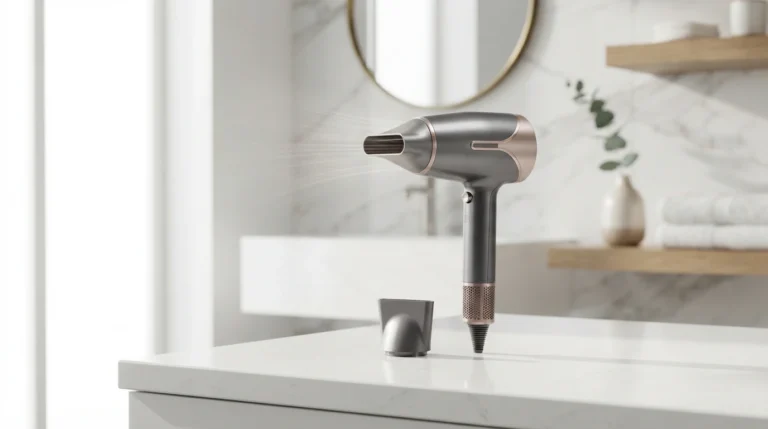
The Dyson hair dryer, best known under the Supersonic name, took a category most people never thought much about and turned it into a genuine talking point. Instead of a bulky motor housed in the head like a traditional dryer, Dyson moved the motor into the handle, which changes both the balance of the tool and how the airflow is engineered.
This guide covers what actually sets the Dyson hair dryer apart, the attachments worth knowing, and how to decide whether it’s the right upgrade for your routine. It’s a genuinely useful comparison point if you’re currently choosing between a standalone dryer and a multi-purpose styling tool, since the two solve slightly different problems even within the same product lineup.
Table of Contents
- What Sets the Dyson Hair Dryer Apart
- Common Attachments and What They Do
- Features Worth Prioritizing
- Matching the Dryer to Your Hair Type
What Sets the Dyson Hair Dryer Apart
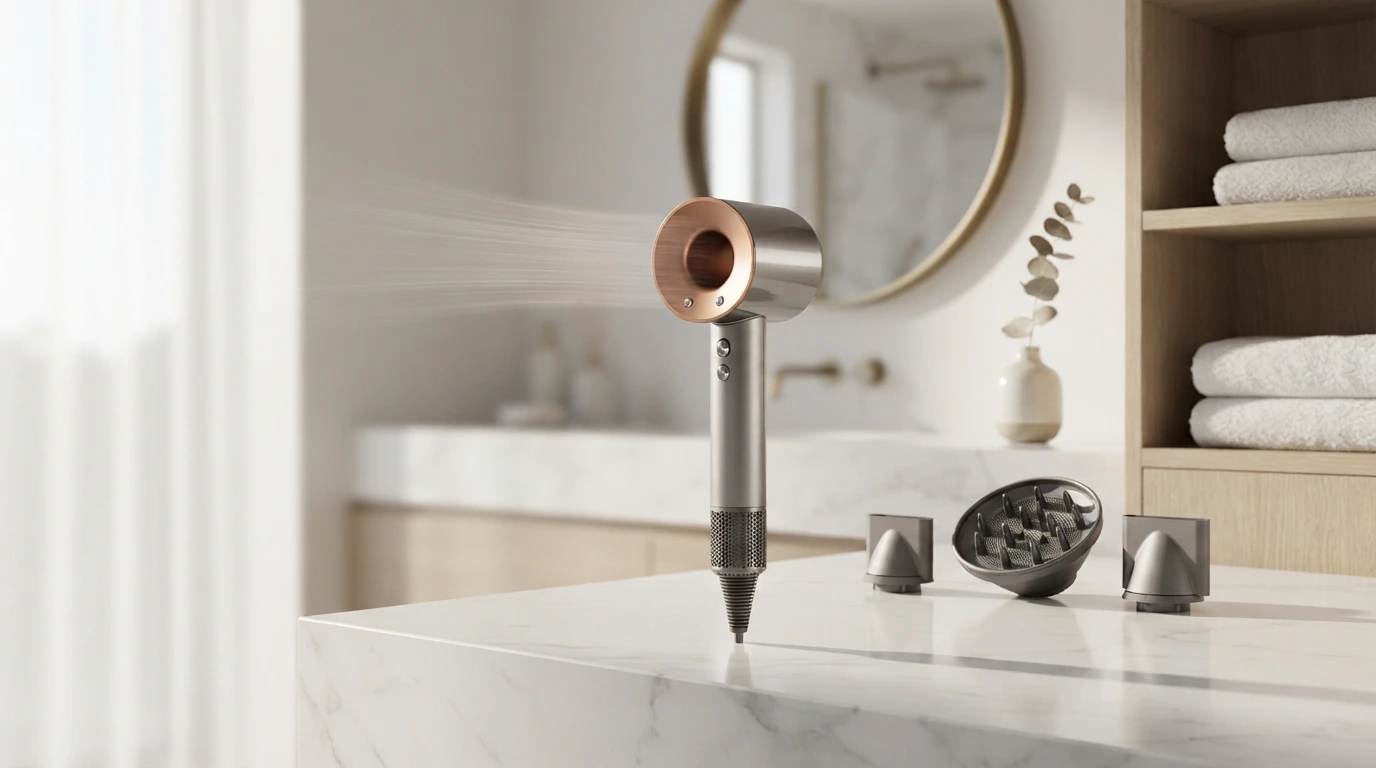
The most immediately noticeable design choice is the motor placement — housed in the handle rather than the head, it shifts the weight distribution and lets the nozzle stay compact and lightweight. That balance matters more than it sounds during a full drying and styling session.
A few qualities travelers and reviewers commonly point to:
- Intelligent heat control, which measures airflow temperature many times per second to help avoid extreme heat that can damage hair over time.
- A compact, lightweight head, reducing arm fatigue during longer styling sessions compared to bulkier traditional dryers.
- Magnetic attachment system, allowing quick attachment changes without extra fumbling mid-routine.
- Fast drying speeds, largely attributed to a smaller, high-speed digital motor generating strong, concentrated airflow.
This combination is a big reason the Dyson hair dryer remains a frequently recommended option in “best hair dryer” comparisons, even against far less expensive alternatives.
Common Attachments and What They Do
Most Dyson hair dryers ship with a small set of purpose-built attachments, and each serves a distinct role in a full styling routine.
- The styling concentrator focuses airflow into a narrow stream, ideal for precision drying and smoothing sections of hair.
- The diffuser spreads airflow more broadly, which works well for curly or wavy hair types that benefit from gentler, more even drying.
- The flyaway attachment uses the Coanda effect to smooth stray hairs into place, best suited for dry or already-straightened hair.
- The gentle air attachment on some models reduces airflow intensity, useful for finer or more delicate hair types.
Knowing which attachment matches your hair type and desired finish makes a noticeable difference in how efficiently and how well a session goes, and it’s worth experimenting with each one early on rather than defaulting to a single go-to piece.
Features Worth Prioritizing
A handful of details are worth checking closely when comparing Dyson hair dryer models or generations:
- Heat and speed setting count, since more granular control allows better matching to different hair types and styling goals.
- Voltage compatibility, particularly relevant for anyone who travels internationally and needs a dryer that adapts automatically.
- Attachment compatibility, since not every attachment works across every generation of the dryer.
- Noise level, an underrated but genuinely noticeable factor for anyone using the dryer early in the morning or in shared living spaces.
- Overall weight and grip design, since a lighter, well-balanced handle noticeably reduces fatigue during longer styling sessions compared to bulkier traditional dryers.
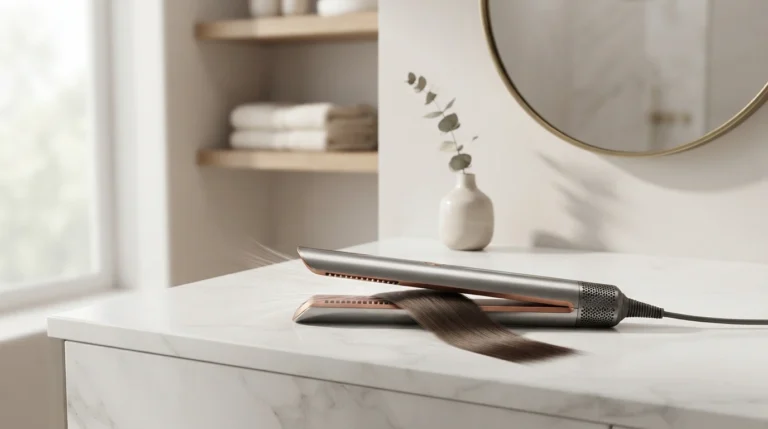
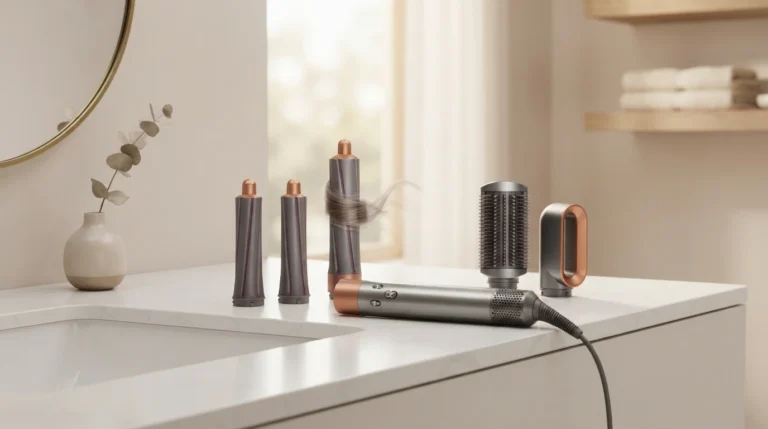
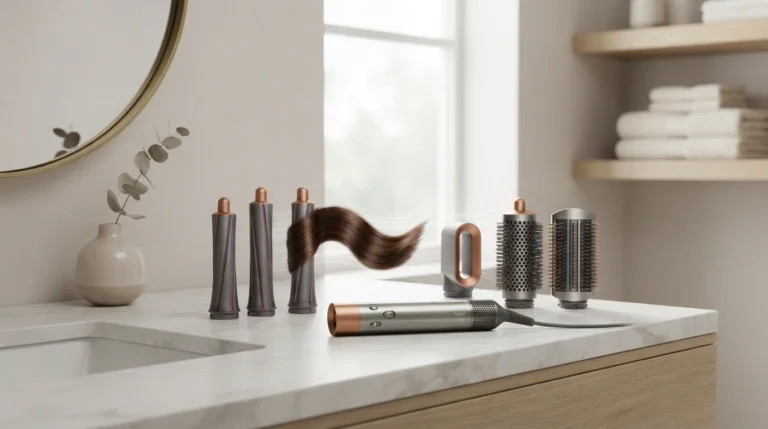
If you’re also considering a styling tool from the same lineup, our Dyson Airwrap Guide covers how that multi-styler compares in terms of technology and everyday use.
Matching the Dryer to Your Hair Type
Choosing the right settings and attachments really comes down to your hair’s texture, length, and how often you style it.
- Fine or thin hair: Lower heat settings paired with the gentle air attachment, where available, help avoid over-drying and unnecessary damage.
- Thick or coarse hair: Higher airflow settings combined with the styling concentrator tend to cut drying time significantly.
- Curly or wavy hair: The diffuser attachment is generally the better choice, since it reduces frizz compared to direct, concentrated airflow.
- Frequent travelers: Automatic voltage adjustment is worth prioritizing specifically, since it removes the need for separate travel dryers or converters.
Matching your actual hair type and routine to the right settings, rather than defaulting to the highest heat and speed every time, tends to produce better results with less cumulative damage.
Frequently Asked Questions
Is the Dyson hair dryer worth the higher price?
For people who dry and style their hair daily, the combination of speed, lighter weight, and heat control can genuinely justify the cost over time, though occasional users may not see as much value.
Does the Dyson hair dryer really prevent heat damage?
Its intelligent heat control is designed to reduce the risk of extreme heat exposure, though any heat styling still carries some risk with very frequent use.
Can the Dyson hair dryer be used internationally?
Many models automatically adjust to different voltages, making them a practical option for frequent travelers, though it’s worth confirming this on your specific model.
Which attachment is best for curly hair?
The diffuser attachment is generally recommended for curly or wavy hair, since it spreads airflow more evenly and reduces frizz compared to concentrated airflow.
How loud is the Dyson hair dryer compared to traditional dryers?
Noise levels vary by model and setting, and while Dyson has worked to manage sound, it’s still a meaningfully powerful motor, so checking recent reviews for your specific model is worthwhile.
Conclusion
The Dyson hair dryer earns its reputation by rethinking where the motor sits and how airflow and heat are controlled, resulting in a lighter, faster tool than many traditional alternatives. Matching the right attachments and settings to your specific hair type is what ultimately determines whether the investment delivers real day-to-day value, rather than just sitting in a drawer as an expensive novelty.