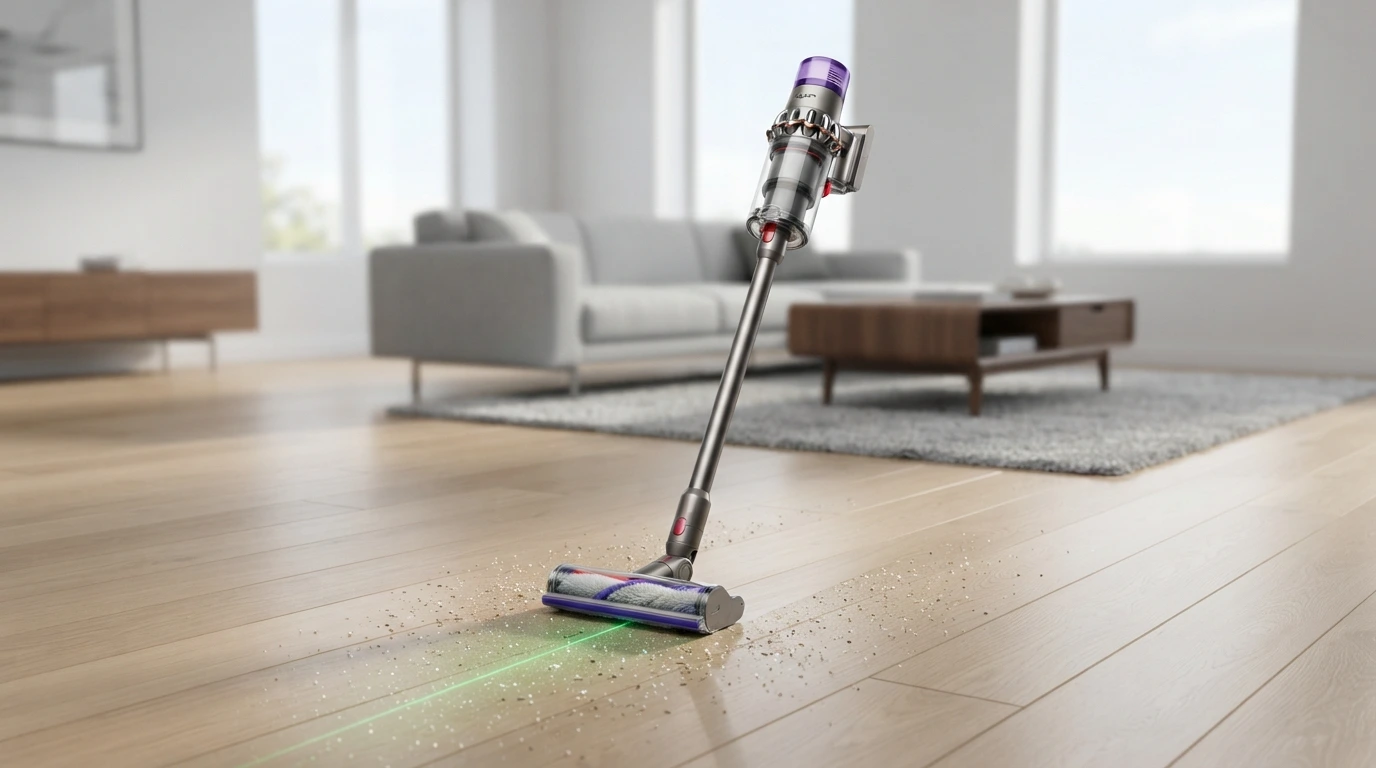
Dyson V15 Features That Set It Apart
The Dyson V15, widely known by its Detect naming, sits near the top of the brand’s cordless vacuum lineup and is frequently cited as the model that pushed the category forward. Its most talked-about feature a laser that reveals microscopic dust invisible to the naked eye turned an otherwise routine chore into something people actually post about online, but the model backs that novelty with genuinely useful engineering underneath.
This guide covers what generally sets the V15 apart, the features worth understanding, and how to decide whether it’s worth the step up from a more basic cordless model. It’s a useful comparison point specifically for shoppers deciding whether the added sensor technology justifies a higher price over other models in Dyson’s cordless range.
Table of Contents
- What Sets the Dyson V15 Apart
- Key Technology Behind the V15
- Features Worth Prioritizing
- Is the V15 Worth the Upgrade?
What Sets the Dyson V15 Apart
The V15 sits at the higher end of Dyson’s cordless vacuum range, generally distinguished by more advanced sensing technology layered on top of the same core cyclone suction and digital motor engineering found across the lineup.
A few qualities commonly associated with this model tier:
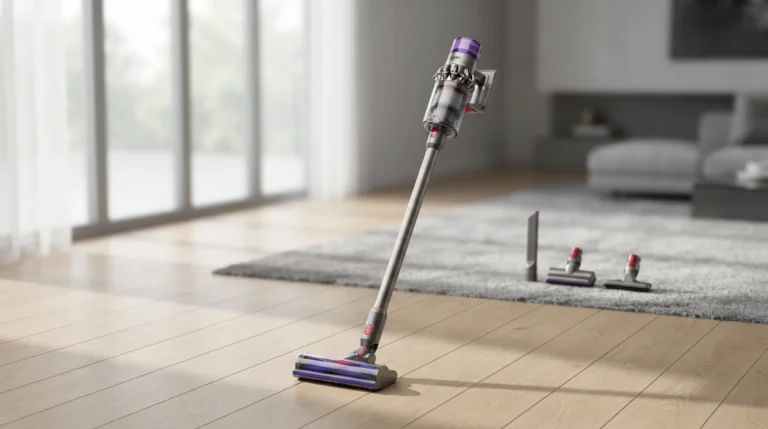
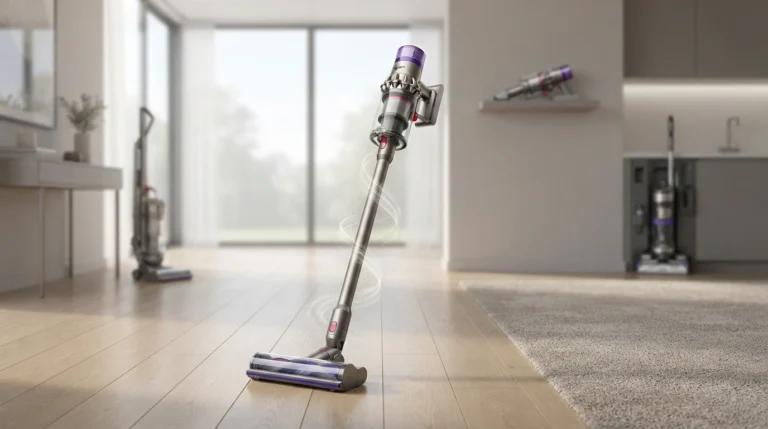
- Laser dust detection, using an angled laser built into the cleaner head to illuminate fine dust particles on hard floors that standard lighting would miss entirely.
- Piezo sensor technology, which is designed to count and measure microscopic dust particles in real time as you clean.
- An onboard LCD screen, displaying live particle counts and remaining run time, giving direct feedback on cleaning progress rather than just trusting a visual check.
- Automatic suction adjustment, with the vacuum reportedly adapting power output based on detected floor type and debris level.
This combination is a big reason the V15 tier regularly appears at the top of “best cordless vacuum” comparisons, even against newer competing brands.
Key Technology Behind the V15
Beyond the laser and sensor headline features, a few underlying design choices are worth understanding to get the most out of the vacuum.
- A high-speed digital motor, the same core engineering foundation used across Dyson’s cordless lineup, tuned for strong suction in a compact form factor.
- Full-machine filtration, designed to trap fine dust and allergens rather than releasing them back into the room during use.
- Interchangeable cleaner heads, since the laser dust detection feature is specific to certain floor heads, meaning your results can vary depending on which head is attached.
- Real-time particle counting, which the LCD screen translates into a visible number, giving a rough sense of how much fine debris a given room actually contained.
Understanding which features are tied to which attachments helps set realistic expectations, since not every cleaning task will showcase every headline feature equally.
Features Worth Prioritizing
A handful of specific details are worth checking closely when deciding on the V15 versus other models in the lineup:
- Run time on your typical suction mode, since higher-powered settings drain the battery meaningfully faster than the lowest setting often used in marketing claims.
- Bin capacity, particularly relevant for larger homes or pet owners who want to empty the vacuum less frequently.
- Cleaner head compatibility, since laser detection and other advanced features are generally tied to specific attachments rather than the vacuum body itself.
- Overall weight when fully assembled, since more advanced sensor hardware can add some weight compared to more basic cordless models.
If you’re weighing the V15 against Dyson’s broader cordless range, our Dyson Cordless Vacuum Guide covers how different tiers in the lineup compare more generally.
Is the V15 Worth the Upgrade?
Whether the V15 justifies its higher price over a more basic cordless model really depends on your priorities and how you use the vacuum day to day.
- Data-driven cleaners: If you like concrete feedback on cleaning performance, the LCD screen and particle counting genuinely deliver something more basic models don’t offer.
- Hard-floor households: The laser dust detection feature is specifically most useful on hard floors, where fine dust is otherwise easy to miss visually.
- Budget-conscious buyers: A more basic cordless model in the same lineup may deliver similar core suction performance without paying for the advanced sensor technology.
- Pet owners: Real-time particle counting can offer some reassurance that fine dander and hair are being captured, even in areas that look clean at a glance.
Being clear about whether you’ll actually use the advanced sensor features regularly rather than buying them purely for the novelty leads to a more satisfying long-term purchase.
Frequently Asked Questions
Is the Dyson V15 worth the extra cost over other cordless models?
For households that value real-time cleaning feedback and hard-floor performance specifically, the added features can genuinely be worth it, though the core suction performance is shared with less expensive models in the lineup.
Does the laser dust detection work on carpet?
The laser feature is primarily designed for hard floors, since it relies on visually illuminating dust that would otherwise blend into the surface.
How accurate is the particle counting feature?
It’s designed to give a real-time relative sense of debris levels rather than a precise scientific measurement, useful mainly for tracking cleaning progress room to room.
Does the V15 come with multiple cleaner heads?
Many versions include more than one attachment, though which heads are included and which support laser detection can vary by specific bundle.
Is the V15 heavier than more basic Dyson cordless vacuums?
It can be slightly heavier due to additional sensor hardware, though the difference is generally modest compared to the overall convenience of a cordless design.
Conclusion
The Dyson V15 earns its reputation by pairing the brand’s core cordless engineering with genuinely useful sensing technology, particularly for hard-floor cleaning and households that want real feedback on cleaning performance. Deciding whether it’s worth the upgrade comes down to whether those specific features matter for your home, rather than assuming more expensive automatically means better for every use case.