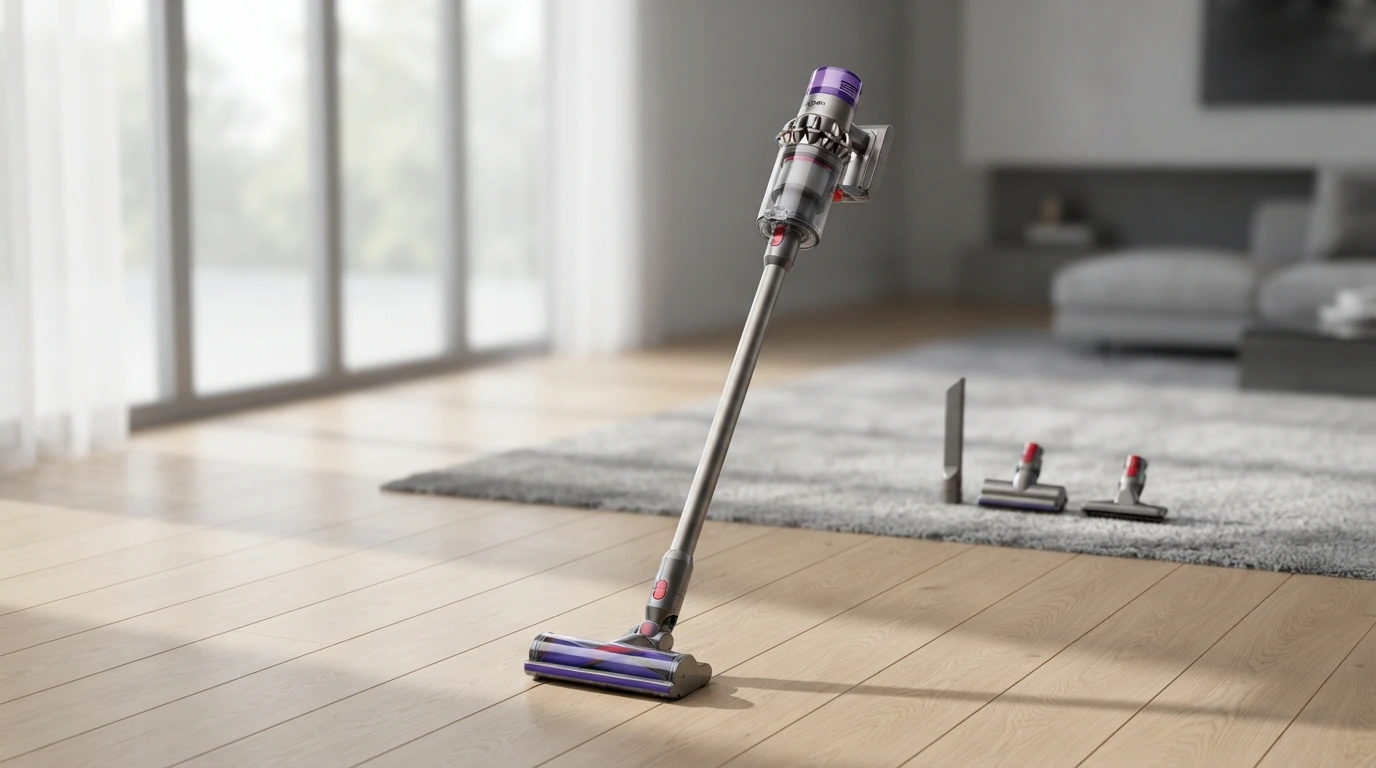
Dyson Cordless Vacuum Guide: 7 Things to Check First
Dyson cordless vacuum guide lineup has become one of the more searched categories in home cleaning, largely because it solved a real problem: traditional cordless vacuums used to trade away suction power for portability. Dyson’s digital motors were built specifically to close that gap, which is why the brand’s stick vacuums remain a benchmark competitors are frequently measured against.
This guide covers what generally sets a Dyson cordless vacuum apart, the features worth prioritizing, and how to decide which model fits your home. It’s especially useful if you’re upgrading from an older cordless vacuum and want to know which specs actually make a meaningful difference versus which ones are mostly marketing.
Table of Contents
- What Sets a Dyson Cordless Vacuum Apart
- Common Features Across the Lineup
- Features Worth Prioritizing
- Matching a Cordless Vacuum to Your Home
What Sets a Dyson Cordless Vacuum Apart
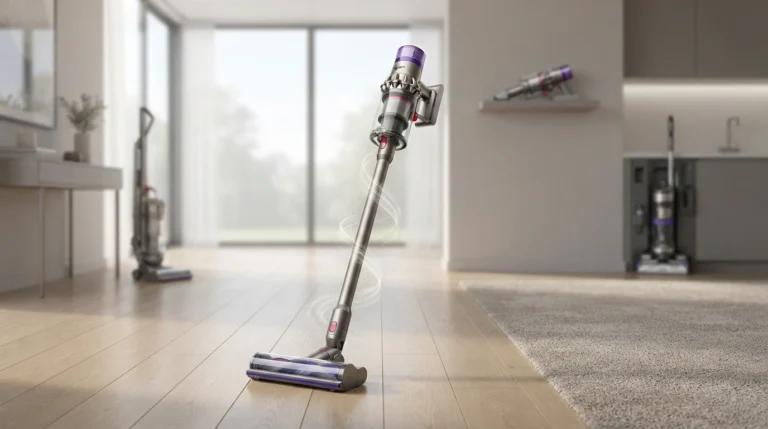
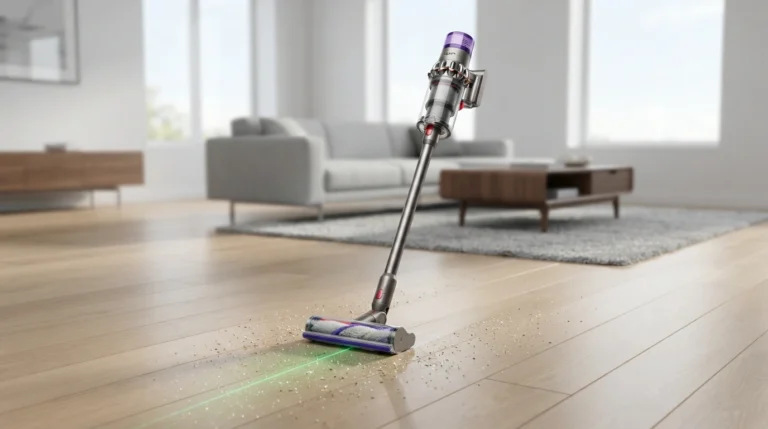
The core engineering behind Dyson’s cordless lineup is a small, high-speed digital motor capable of generating strong suction without the size and weight of a traditional corded vacuum motor. That’s the main reason these models can compete with corded uprights on cleaning performance while still being lightweight enough to carry room to room.
A few qualities travelers and homeowners commonly associate with the lineup:
- High-speed digital motors, engineered to deliver strong suction in a compact, battery-powered package.
- Multi-surface versatility, with many models transitioning between carpets and hard floors without needing a separate attachment.
- Handheld conversion, letting a single vacuum switch from a full-size stick vacuum to a compact handheld for cars, upholstery, or tight spaces.
- Advanced filtration, aimed at capturing fine dust and allergens rather than releasing them back into the room.
This combination is a big reason Dyson’s cordless vacuums remain a frequent recommendation in “best cordless vacuum” comparisons, even against far less expensive alternatives.
Common Features Across the Lineup
Most models in Dyson’s cordless vacuum range share a handful of recognizable design elements, even as specific specs vary by generation.
- Removable, rechargeable battery packs, with some models supporting spare batteries for extended cleaning sessions.
- LCD or LED screens on select models, displaying real-time information like remaining run time or a countdown based on suction mode.
- Multiple suction or power modes, letting you balance cleaning power against battery life depending on the task.
- A range of interchangeable attachments, including motorized brush heads, crevice tools, and upholstery tools for different surfaces and mess types.
Knowing which of these features actually matter for your home helps you avoid overpaying for capabilities you won’t use regularly.
Features Worth Prioritizing
A handful of specific details are worth checking closely when comparing Dyson cordless vacuum models:
- Run time on your preferred suction mode, since manufacturer-listed run times are often based on the lowest power setting, not the one you’ll use daily.
- Bin capacity, particularly relevant for larger homes or pet owners who need to empty the vacuum less frequently.
- Weight and balance, since a lighter, well-balanced vacuum is noticeably easier to use overhead or on stairs.
- Charging dock design, since a wall-mounted dock that also stores attachments keeps the vacuum ready to grab without hunting for parts.
- Noise level, since compact, high-speed motors can be noticeably louder on the highest suction setting, which matters in homes with young children or shared walls.
If you’re deciding between a cordless model and a different form factor entirely, our Dyson Vacuum Guide covers the full range of categories in more depth.
Matching a Cordless Vacuum to Your Home
The right Dyson cordless vacuum really depends on your home’s size, floor types, and how you actually clean day to day.
- Small apartment or condo: A standard cordless model generally offers enough run time and bin capacity without needing a spare battery.
- Larger multi-floor home: Prioritize models with a spare battery option or longer maximum run time to cover a full cleaning session without recharging mid-task.
- Pet owners: Look for motorized brush heads specifically designed to reduce hair wrap-around, along with strong filtration for dander.
- Frequent quick clean-ups: A model with fast handheld conversion is worth prioritizing for spot-cleaning spills or crumbs without pulling out the full vacuum.
Being honest about your actual cleaning habits, rather than buying the highest-spec model available, tends to lead to better long-term satisfaction with the purchase, especially since higher-tier models often come with a meaningfully higher price tag for features you may rarely use.
Frequently Asked Questions
How long does a Dyson cordless vacuum battery last on a single charge? Run time varies significantly by model and suction mode, with higher power settings draining the battery considerably faster than lower ones checking the specific model’s real-world reviews is worthwhile.
Are Dyson cordless vacuums as powerful as corded ones? Many current cordless models are engineered to compete closely with corded vacuums on suction, though very large, heavily carpeted homes may still benefit from a corded model’s unlimited run time and steadier power delivery throughout a session.
Do Dyson cordless vacuums work well on pet hair? Yes, many models include motorized brush heads and filtration specifically designed for pet hair and dander, making them a popular choice among pet owners.
Can the battery be replaced on a Dyson cordless vacuum?
Many models use removable battery packs that can be replaced over time, though availability and cost can vary by model and region.
Is a spare battery worth buying?
For larger homes or households that clean frequently, a spare battery can meaningfully extend total cleaning time without interrupting a session to recharge.
Conclusion
A Dyson cordless vacuum earns its reputation through a specific engineering trade-off: compact, high-speed motors that deliver real suction power without sacrificing portability. Matching run time, bin capacity, and attachment needs to your actual home and cleaning habits is what ultimately determines whether the investment feels worthwhile day to day, rather than just impressive on a spec sheet.