
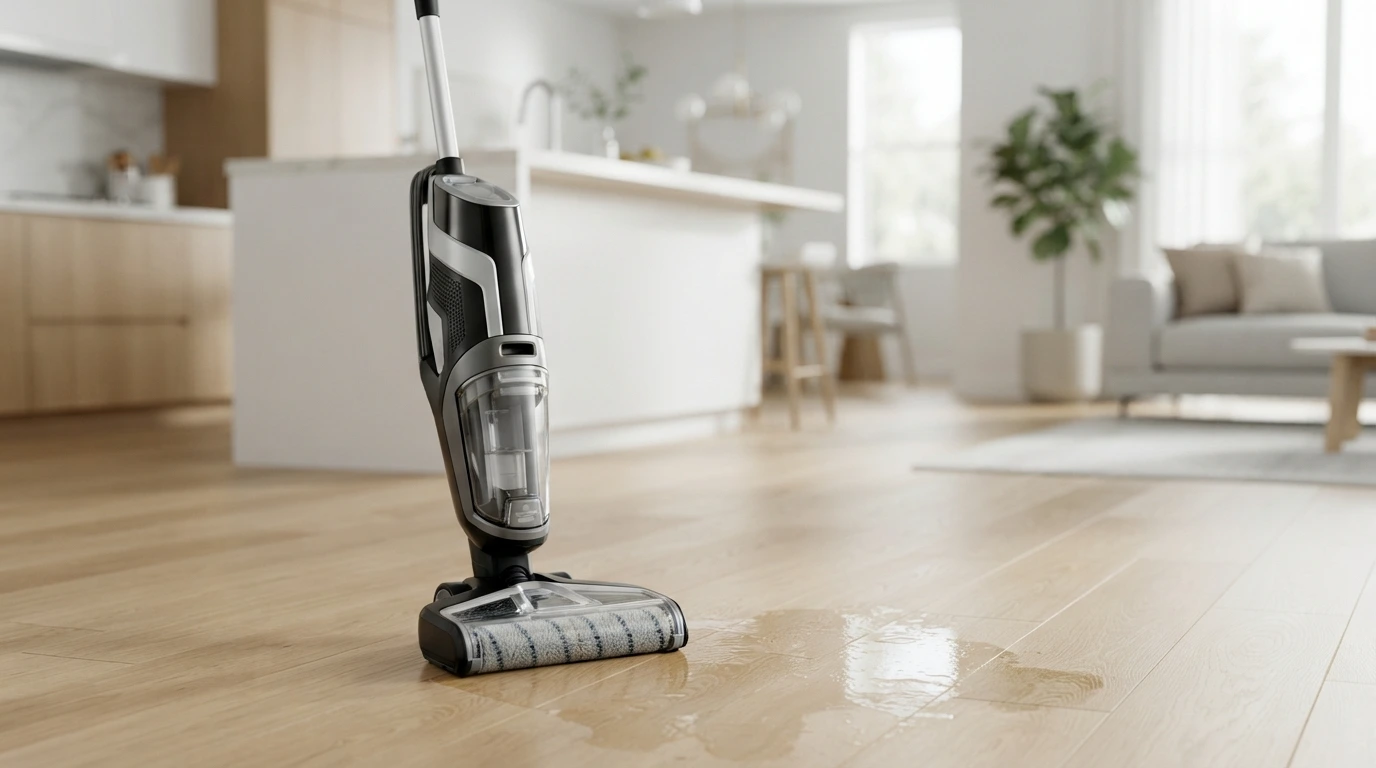
Bissell CrossWave: 7 Features That Simplify Floor Care
The Bissell CrossWave combines vacuuming and mopping into a single pass, using a dual-tank system to simultaneously pick up dry debris and wash hard floors or area rugs. That combination is part of why it’s become a common alternative to running a separate vacuum and mop as two distinct chores.
This guide covers what generally sets the CrossWave apart, how the dual-tank system works, and a few tips for getting consistently clean results.
Table of Contents
- What Sets the Bissell CrossWave Apart
- How the Dual-Tank System Works
- Getting the Cleanest Results
- Maintenance That Keeps It Performing Well
What Sets the Bissell CrossWave Apart
Most floor care routines involve vacuuming first, then mopping separately, but the CrossWave is built specifically to combine both steps into one motion.
- Simultaneous vacuum and wash action, picking up dry debris while also applying and removing cleaning solution in a single pass.
- Multi-surface capability, with many models designed to handle both hard floors and area rugs without switching tools.
- A two-tank design, keeping clean solution separate from dirty water pulled up during cleaning.
- A roller brush designed for wet and dry pickup, built to handle both debris and liquid without needing separate attachments.
This all-in-one approach is part of why the CrossWave tends to appeal to households wanting to cut down on the time spent switching between separate vacuuming and mopping routines.
How the Bissell CrossWave Dual-Tank System Works
Understanding the basic mechanics helps explain both the CrossWave’s convenience and its specific maintenance needs.
- The clean tank holds water and cleaning solution, which the machine dispenses onto the floor as you clean.
- The dirty tank collects used solution along with dirt and debris, keeping it separate from the clean supply throughout the cleaning process.
- The roller brush spins continuously, agitating the floor surface while simultaneously absorbing dirty liquid back into the machine.
- A self-cleaning cycle, included on many models, rinses the roller brush after use to reduce manual maintenance.
This separation between clean and dirty water is central to how the machine avoids simply redistributing dirty water across your floor, which is a common complaint with older, single-tank wet mopping tools.
Getting the Cleanest Results From a CrossWave
A few habits help you get consistently clean, streak-free floors once you’re comfortable with the basic operation.
- Do a quick dry sweep first for larger debris, since very large particles like food chunks can sometimes be better handled with a quick manual pickup before running the CrossWave.
- Use the manufacturer-recommended cleaning solution, since other cleaning products can potentially damage the machine or leave residue not designed for its wash-and-vacuum system.
- Work in manageable sections, rather than rushing across a large area, to give the machine adequate time to both apply and pick up solution effectively.
- Empty and rinse the dirty tank promptly after use, since letting dirty water sit can lead to odor buildup over time.
If you’re deciding between a wet-dry hybrid like the CrossWave and a more traditional vacuum, our Bissell Vacuum guide covers standard vacuum options worth comparing based on your specific flooring and cleaning needs.
Maintenance That Keeps the CrossWave Performing Well
Like any wet-dry cleaning appliance, a bit of regular maintenance keeps the CrossWave performing consistently over time.
- Run the self-cleaning cycle after each use, if your model includes one, to keep the roller brush free of buildup.
- Check and clean filters regularly, since clogged filters can reduce suction and overall cleaning performance.
- Inspect the roller brush periodically for hair or debris tangled around it, which can affect both cleaning performance and motor strain.
- Allow the unit to fully dry between uses, particularly the roller brush and tanks, to prevent mold or mildew buildup in a consistently damp environment.
The EPA has noted that indoor air quality can be significantly affected by trapped dust, allergens, and debris in flooring, which is part of why combining effective vacuuming with regular washing, as the CrossWave does, can meaningfully support a cleaner indoor environment when paired with consistent maintenance.
Frequently Asked Questions
Can the Bissell CrossWave be used on carpet?
The CrossWave is generally designed for hard floors and area rugs rather than full wall-to-wall carpet, so it’s worth confirming your specific model’s surface compatibility before using it on carpeted areas.
Do I need special cleaning solution for the CrossWave?
Yes, generally. Using the manufacturer-recommended solution helps avoid potential damage to the machine and ensures compatibility with its wash-and-vacuum system.
How often should I clean the CrossWave itself?
Rinsing the tanks and running any self-cleaning cycle after each use, along with periodic filter and roller brush checks, helps maintain consistent performance.
Is the CrossWave better than using a separate vacuum and mop?
It depends on your priorities. The CrossWave saves time by combining both steps, though a separate vacuum and mop may offer more specialized performance for specific surfaces or heavier debris.
Why does my CrossWave leave streaks on the floor?
This is often caused by a dirty roller brush, using the wrong cleaning solution, or moving too quickly across the floor without giving the machine time to fully pick up the applied solution.
Conclusion
The Bissell CrossWave genuinely simplifies floor care by combining vacuuming and washing into a single pass, saving time compared to running separate tools. Understanding the dual-tank system and keeping up with basic maintenance, like rinsing tanks and checking the roller brush, will help you get consistently clean results. For households with a mix of hard flooring and area rugs, it’s a practical way to cut down on the number of separate cleaning steps in a regular routine, week after week.
Getting comfortable with the machine’s specific quirks, like how much solution it dispenses or how it handles corners and edges, also takes a bit of practice. Most owners find that after a handful of uses, the CrossWave becomes a fairly intuitive part of a regular cleaning rotation rather than a tool that requires constant thought.
3 Comments