
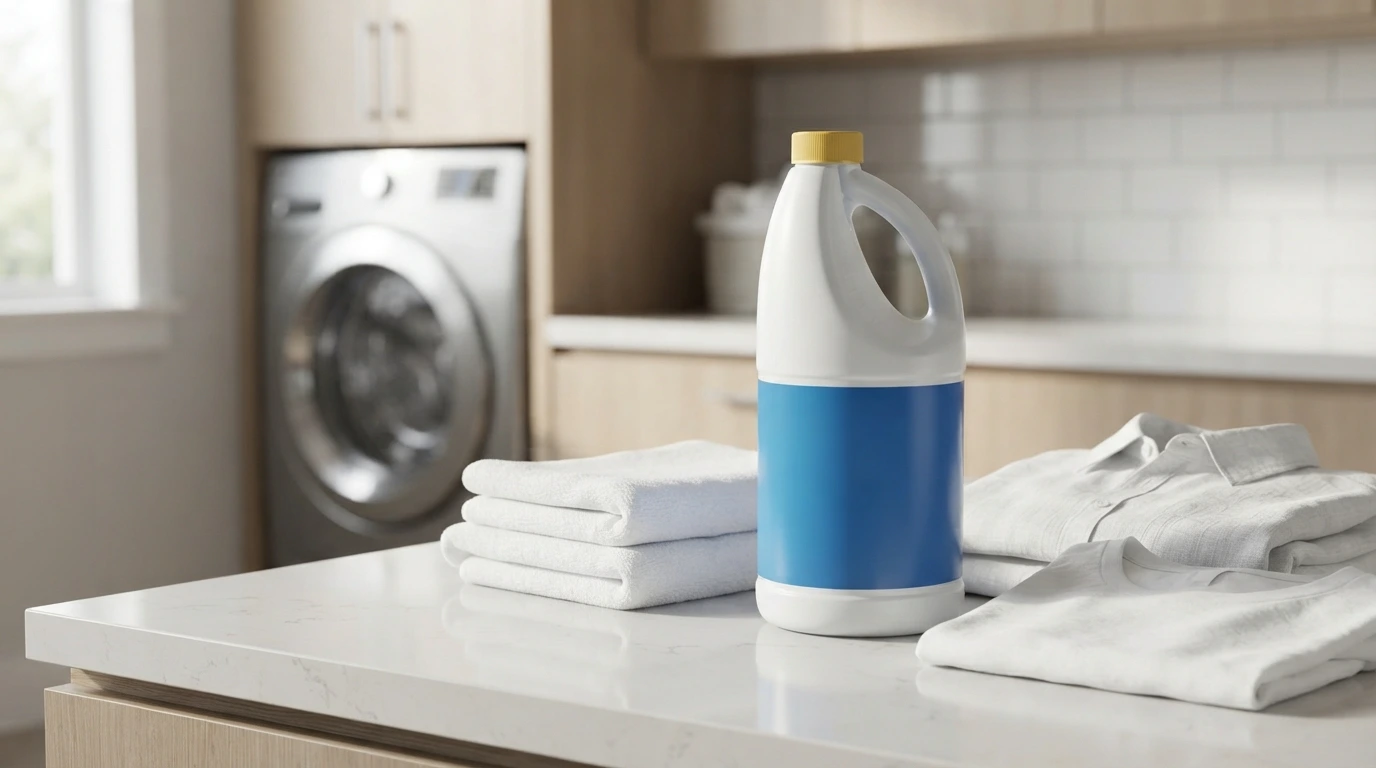
Clorox Bleach: Uses, Benefits, Safety Tips, and How to Use It
Learn how to use Clorox bleach safely for laundry, cleaning, disinfecting, and stains, plus important bleach safety tips and common mistakes to avoid.
Clorox Bleach: Uses, Benefits, Safety Tips, and How to Use It
The main active ingredient in regular liquid Clorox bleach is sodium hypochlorite.
Clorox makes more than one type though. There’s traditional liquid bleach, no-splash versions, scented ones, outdoor bleach, and even powdered concentrates. Each one is made for slightly different jobs, so the directions and what it can disinfect aren’t all the same.
Clorox Disinfecting Bleach is the one most people think of. It’s made for whitening bleach-safe laundry, cleaning hard nonporous surfaces, disinfecting, removing mold and mildew, and getting rid of odors. Because there are different formulas, you always want to check what your specific bottle says it can do.
What Is Clorox Bleach Used For?
Clorox Bleach has stuck around for so long because it’s versatile. If the label says it’s okay, you can use the right Clorox product for several things around the house.
1. Whitening Laundry
It’s great for whitening white clothes, towels, sheets, and other fabrics that are marked as bleach-safe. But not everything can handle it. Wool, silk, spandex, leather, and a lot of colored fabrics will get damaged. Always check the care tag on the clothing first.
2. Cleaning and Disinfecting Hard Surfaces
Clorox Disinfecting Bleach can be used on hard, nonporous surfaces in kitchens and bathrooms. For it to actually disinfect, the surface has to stay wet for the contact time on the label. For general hard-surface disinfecting, Clorox currently says at least 6 minutes.
3. Removing Mold and Mildew Stains
It can help remove mold and mildew from hard, nonporous surfaces like tile and bathroom counters. It’s not for every material though. Test a small spot first and always follow the label.
4. Deodorizing
Bleach can help remove certain odors while it cleans. That’s useful for laundry and some surfaces. But stronger isn’t better. Using more than the label says won’t clean better and can cause damage.
How to Use Clorox Bleach Safely
Bleach is effective, but you have to respect it. Every Clorox product can have slightly different directions, so read the label on your bottle first.
General safety basics:
. Keep it away from kids and pets. Never mix it with other cleaners. And don’t use it on fabrics or surfaces that aren’t bleach-safe. Clorox specifically calls out ventilation, following directions, and keeping it out of reach of children and pets.
How to Use Clorox Bleach for Laundry
For laundry, start by checking the care labels and sorting your clothes.
The basic steps are: sort your laundry, add your regular detergent, then add the amount of bleach the bottle recommends. Most washers have a bleach dispenser — use that instead of pouring it straight on clothes. Then add your clothes and run the wash.
The exact amount depends on your Clorox product and your washing machine, so don’t guess. And just because something is light-colored doesn’t mean it’s safe for chlorine bleach. Check the tag.
How to Use Clorox Bleach for Cleaning Surfaces
For cleaning and disinfecting, prep matters.
Clorox recommends first washing the surface to remove dirt. Then apply the diluted bleach solution, keep the surface wet for the contact time listed, and rinse if the directions say to.
For food-contact surfaces like kitchen counters, rinsing is especially important. And don’t pour straight bleach on a surface unless the label specifically tells you to.
What Should You Never Mix With Clorox Bleach?
This is the most important safety rule.
Never mix bleach with ammonia or anything acidic like vinegar or toilet bowl cleaners. Those combinations can create toxic gases like chloramine or chlorine gas.
Here’s what to keep away from bleach:
- Ammonia: can produce toxic chloramine gases
- Vinegar: acidity can lead to chlorine gas
- Acidic toilet cleaners: can create hazardous fumes
- Rust removers: often contain acids that react with bleach
- Other household cleaners: unpredictable chemical reactions
Rule of thumb: use bleach by itself unless the product label specifically says you can mix it.
Surfaces You Should Avoid With Clorox Bleach
Chlorine bleach isn’t for everything. Clorox says not to use Disinfecting Bleach on wool, silk, spandex, leather, marble, quartz, brass, mirrors, painted surfaces, and unsealed wood.
When you’re not sure, check the surface manufacturer’s instructions before using bleach on it.
Clorox Bleach vs. Other Bleach Products
Not everything with “Clorox” on it is the same. For example, Clorox No-Splash Bleach is made for laundry and cleaning but it’s not registered as a disinfectant. If you need something that actually disinfects and kills germs, look for a label that specifically says “disinfects.”
The word “bleach” alone doesn’t tell you everything about what the product is approved to do.
What to Check Before Buying
Before you grab a bottle, look at: the product name, what it’s intended for, the active ingredients, disinfecting claims, how to dilute it, what fabrics and surfaces it’s safe for, and all the safety warnings. Picking the right formula matters more than just grabbing any bleach.
Common Mistakes to Avoid When Using Clorox Bleach
Even good products cause problems when used wrong.
Using too much bleach won’t clean better and can damage things. Using it on the wrong fabric will ruin clothes. Mixing it with other cleaners is dangerous. Using it in a room with no airflow can irritate your eyes and lungs. And ignoring the label is how most mistakes happen. Clorox has multiple products with different uses, so the label is your best guide for dilution, contact time, and how to apply it.
Clorox Bleach Safety Tips
Keep these in mind every time you use it: store it securely away from kids, keep pets away while cleaning, wear gloves if the label says to, ventilate the area, never mix it with other cleaners, follow dilution instructions, avoid incompatible surfaces, and don’t use household bleach for personal hygiene. Clorox specifically says Disinfecting Bleach is not for things like brushing teeth or treating cuts.
What to Do After Accidental Bleach Exposure
If it gets on your skin or in your eyes, rinse with lots of water. If irritation continues, get medical help. If you breathe in fumes, go to fresh air right away and ventilate the room. If symptoms don’t go away, call a doctor. If someone swallows bleach, don’t try to treat it at home — call poison control or get medical help immediately.
Frequently Asked Questions About Clorox Bleach
Is Clorox bleach the same as chlorine bleach?
Clorox makes chlorine-based liquid bleach with sodium hypochlorite, but they also have other formulas. Check your specific product label.
Can Clorox bleach kill germs?
Clorox Disinfecting Bleach is registered to disinfect specific surfaces and germs when used as directed. Not every Clorox bleach product disinfects, so read the label.
Can I mix Clorox bleach with vinegar?
No. Never mix bleach with vinegar or other acids. It can create dangerous fumes.
Can I use Clorox bleach on colored clothes?
Don’t assume it’s safe. Check the garment care label and the bleach product instructions first.
Does Clorox bleach remove mold?
Yes, Disinfecting Bleach can kill mold on hard, nonporous surfaces. Follow the directions and ventilate well.
Is Clorox bleach safe for septic systems?
Clorox says diluted Disinfecting Bleach is safe for septic systems when used as directed.
Conclusion
Clorox bleach can be really useful for whitening laundry, cleaning certain surfaces, removing mold and mildew, and disinfecting — but only if you use the right product and follow the directions.
The keys are: don’t overuse it, check that your fabric or surface is compatible, ventilate, and never mix it with ammonia, vinegar, acids, or other cleaners. When you’re unsure about anything, read the product label. It tells you exactly how to use that specific Clorox bleach safely and effectively.
One Comment