Dyson Airstrait: 7 Reasons to Consider This Straightener
The Dyson Airstrait takes a genuinely different approach to hair straightening than the flat irons most people grew up using. Instead of heated plates clamping down on hair, it uses controlled airflow to dry and straighten simultaneously, aiming to reduce the kind of direct heat contact that contributes to long-term hair damage.
This guide covers how the Airstrait actually works, the features worth prioritizing, and how to decide whether it fits your hair type and styling routine. It’s a useful read if you’re weighing it directly against a traditional flat iron, since the underlying technique is different enough that expectations matter as much as the tool itself.
Table of Contents
- How the Dyson Airstrait Actually Works
- Features Worth Prioritizing
- Comparing Airstrait to Traditional Flat Irons
- Matching the Airstrait to Your Hair Type
How the Dyson Airstrait Actually Works
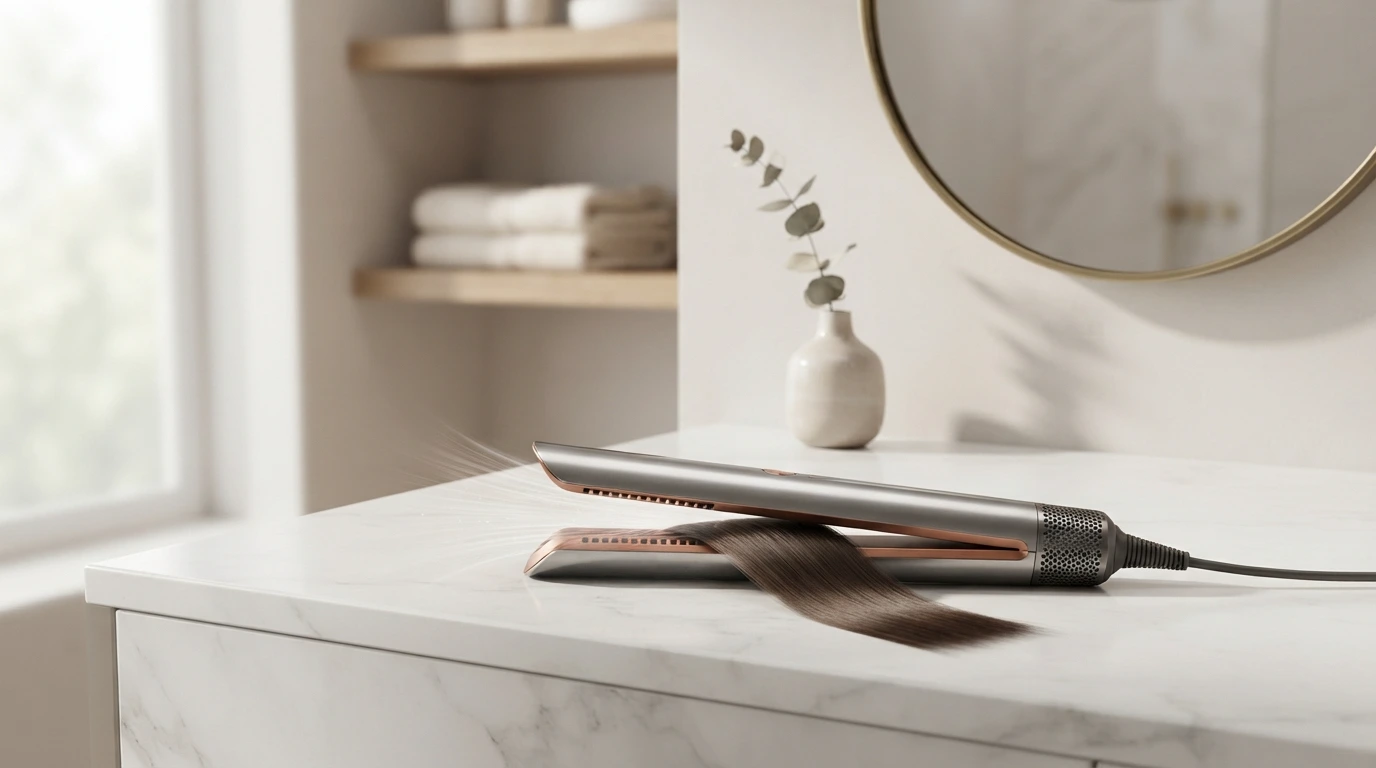
The Airstrait’s core design difference is airflow-based straightening rather than direct heated-plate contact. Air is channeled through the tool and directed at hair sections, which the design relies on to both dry and smooth hair as you pull the tool through.
A few qualities that set this approach apart:
- Straightening wet or dry hair, since the tool is designed to work directly on damp hair, potentially shortening a routine that would otherwise require full drying first.
- Airflow-based smoothing, which the design aims to use in place of the extreme, direct heat associated with plate-based flat irons.
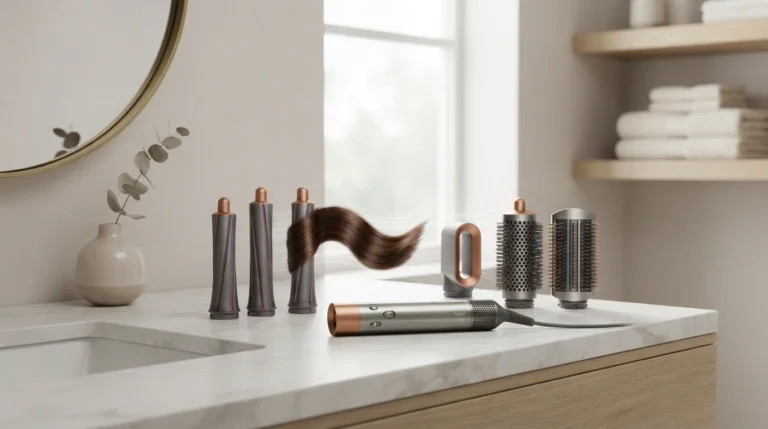
- A flatter, straightener-style form factor, distinguishing it visually and functionally from the curling-focused Airwrap in the same hair care lineup.
- Multiple heat and airflow settings, allowing some adjustment based on hair thickness and desired styling speed.
This combination is part of why the Airstrait draws comparisons to both traditional flat irons and to Dyson’s own Airwrap, despite functioning quite differently from either.
Features Worth Prioritizing
A handful of specific details are worth checking closely when deciding whether the Airstrait fits your routine:
- Heat setting range, since finer control allows better matching to different hair thicknesses without over-processing hair.
- Plate or vent width, which affects how much hair can be styled per pass and how long a full session takes.
- Cord length and flexibility, a small but genuinely relevant detail for comfortable use in front of a mirror or vanity.
- Storage and heat-safe design, since a tool used at styling temperatures benefits from safe, convenient storage between uses.
- Weight and grip comfort, particularly relevant during longer sessions on thick or long hair, where a bulkier tool can become noticeably tiring to hold.
If you’re also considering a curling and volumizing tool from the same lineup, our Dyson Airwrap Guide covers how that multi-styler compares in terms of technology and use case.
Comparing Airstrait to Traditional Flat Irons
Understanding how the Airstrait differs from a conventional flat iron helps set realistic expectations before switching tools.
- Heat exposure: Traditional flat irons apply direct, sustained heat to clamp and smooth hair, while the Airstrait relies more on airflow to achieve a similar straightened result.
- Drying step: Flat irons generally require fully dry hair beforehand, while the Airstrait is designed to work on damp hair directly.
- Learning curve: Traditional flat irons have a long-established, familiar technique, while the Airstrait’s airflow-based approach may take a few uses to master.
- Styling speed: Combining drying and straightening into a single step can shorten an overall routine compared to using a separate dryer and flat iron.
Being aware of these differences upfront makes the transition smoother if you’re switching from a traditional flat iron for the first time.
Matching the Airstrait to Your Hair Type
The right way to use the Airstrait really depends on your hair’s texture, thickness, and typical styling goals.
- Fine or thin hair: Lower heat and airflow settings help avoid over-processing while still achieving a smooth, straight finish.
- Thick or coarse hair: Higher airflow settings, combined with slower, more deliberate passes, tend to produce more consistent results.
- Frizz-prone hair: Starting from clean, damp hair rather than already-dry hair tends to produce a smoother overall finish with this tool specifically.
- Frequent stylers: The reduced reliance on direct heat contact may be a meaningful consideration for anyone straightening their hair on a near-daily basis.
Being realistic about your hair’s actual texture rather than assuming identical technique to a traditional flat iron leads to a much better experience with the tool.
Frequently Asked Questions
Is the Dyson Airstrait better than a traditional flat iron?
It depends on your priorities the Airstrait’s airflow-based approach aims to reduce direct heat exposure, while traditional flat irons offer a more familiar, well-established technique many people already know.
Can the Dyson Airstrait be used on wet hair?
Yes, one of its key features is straightening damp hair directly, which can shorten an overall styling routine.
Does the Dyson Airstrait work on all hair types?
It’s designed to accommodate a range of hair types through adjustable heat and airflow settings, though very thick or curly hair may require more passes or a different technique than fine, straight hair.
Is there a learning curve with the Airstrait?
Yes, since the airflow-based technique differs meaningfully from a traditional flat iron, most users report needing a few sessions to get consistent, salon-like results.
How does the Airstrait compare to the Dyson Airwrap?
The Airwrap is built primarily for curling, waving, and volumizing, while the Airstrait is purpose-built for straightening, so the right choice depends on your primary styling goal.
Conclusion
The Dyson Airstrait offers a genuinely different way to think about straightening leaning on airflow rather than direct heated-plate contact to dry and smooth hair in one step. Matching your technique and settings to your specific hair type, and giving yourself a few sessions to adjust, is what determines whether it becomes a worthwhile long-term replacement for a traditional flat iron, rather than an occasional novelty tool.