
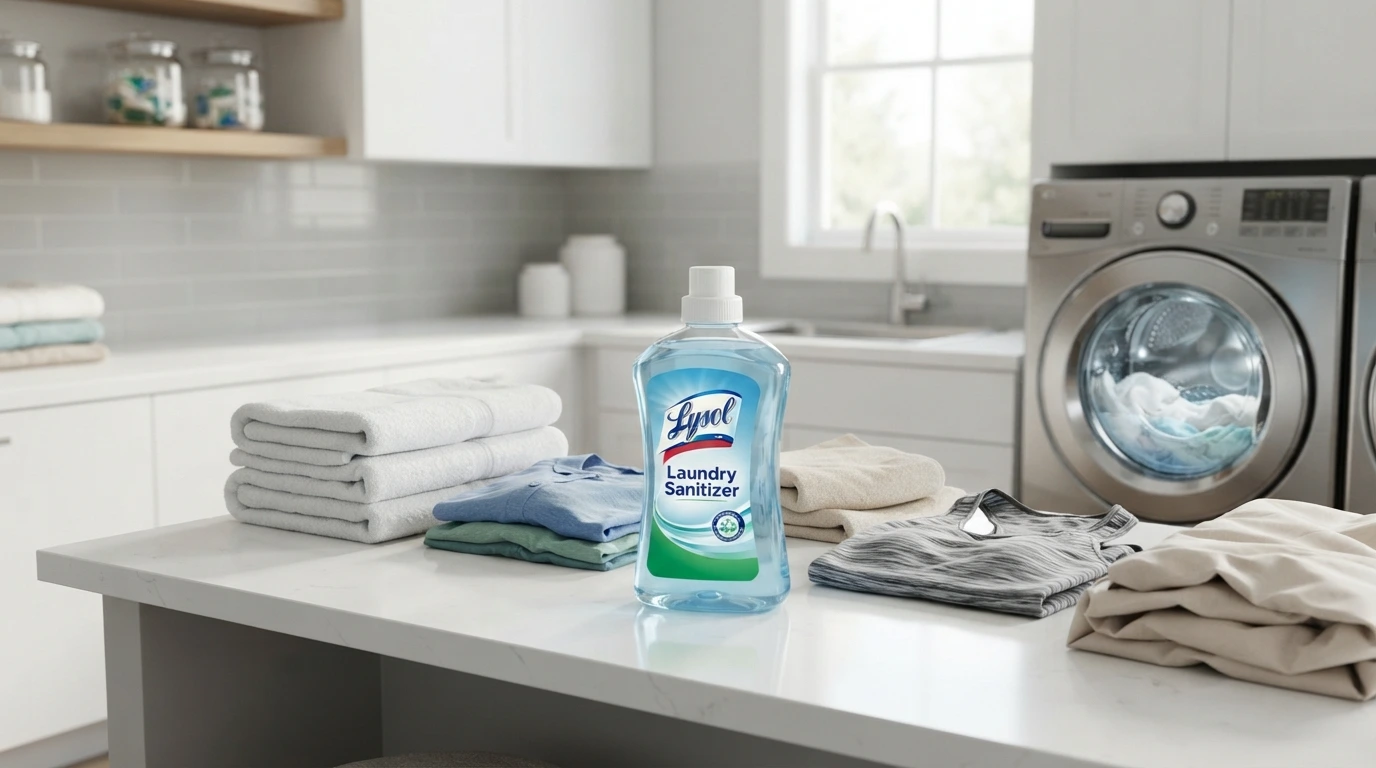
Lysol Laundry Sanitizer: How It Works, Benefits, and How to Use It
Learn how Lysol Laundry Sanitizer works, its benefits, how to use it correctly, and which fabrics it can help sanitize in your regular laundry routine.
Lysol Laundry Sanitizer: A Complete Guide
That’s where Lysol Laundry Sanitizer comes in. It’s not meant to replace detergent. Instead, it’s an extra step you add during the rinse cycle to help kill germs that washing alone might miss.
According to Lysol, when you use it as directed it kills 99.9% of bacteria. It’s made to work in both regular and high-efficiency machines, and it has 0% bleach so you can use it on whites, colors, and most washable fabrics. That includes things like towels, bedding, workout clothes, baby clothes, underwear, and delicates. It also comes in a few scents like Crisp Linen, Lavender Fusion, Tropical Escape, Free & Clear, and Sport, though what’s available depends on where you shop.
What Is Lysol Laundry Sanitizer?
Think of it as the second part of your laundry routine. Detergent’s job is to clean. Lysol Laundry Sanitizer’s job is to sanitize. It’s an additive you use after the wash cycle to target bacteria that might still be left behind.
Lysol says it kills 99.9% of bacteria, including the kind that cause smells to linger in fabric. Because there’s no bleach in it, the brand says it’s safe for most washable clothes. You just don’t pour it in with your detergent. It’s designed to go in during the rinse. It’s also available in several versions, but the formula and how you use it stay the same.
How Does Lysol Laundry Sanitizer Work?
Timing matters here. This product is only meant for the rinse cycle, not the main wash.
A normal routine looks like this. First you wash your clothes with detergent like you always do. Once that cycle finishes, you add Lysol Laundry Sanitizer. You either put it in the fabric softener dispenser or pour it directly into the rinse water, depending on your machine. Then you let it sit for the full time it needs to work. Right now Lysol says that’s 16 minutes in the rinse. After that the cycle finishes and you dry your clothes as usual.
The reason the rinse cycle matters is contact time. The sanitizer needs to actually sit on the fabric for a while to do its job. If you just add it and drain it right away, it won’t work the way it’s supposed to.
Why Is the Rinse Cycle Important?
Adding it at the right stage makes sure the product has enough time to work. If you mix it with detergent in the wash, it gets diluted and rinsed out before it can sanitize. Lysol specifically tells you to use the fabric-softener compartment or add it directly when the rinse starts. That way it stays in the clothes long enough to kill bacteria.
Benefits of Lysol Laundry Sanitizer
There are a few reasons people add this to their laundry.
First, it helps kill bacteria. That 99.9% claim is the main selling point. Second, it helps with odor. Sometimes you wash workout gear or towels and they still smell a little off. That’s usually bacteria. Lysol says the sanitizer kills 99.9% of odor-causing bacteria, so clothes come out smelling fresher. It’s not a replacement for washing and drying properly though. You still need to do that.
Third, there’s no bleach. It’s marketed as 0% bleach, so it’s supposed to be safe for both whites and colors. You still want to check the care label on your clothes and the bottle, but it’s designed not to fade or damage most fabrics.
Fourth, it works in cold water. You don’t have to switch to hot washes to get it to work. That’s helpful if you normally wash in cold to save energy or protect clothes.
What Can You Use Lysol Laundry Sanitizer On?
Lysol says it can be used on most washable fabrics. Common examples are towels, bedding, gym clothes, sportswear, baby clothes, undergarments, delicates, and both white and colored items.
That doesn’t mean it’s for everything. Always check the care label on the garment and the instructions on the sanitizer bottle before using it, especially with specialty fabrics.
How to Use Lysol Laundry Sanitizer
Using it correctly is the key to getting results.
Step 1 is just a normal wash. Use your regular detergent and run the wash cycle. The sanitizer doesn’t replace detergent.
Step 2 is adding the sanitizer. For current U.S. directions, Lysol says to use two capfuls up to the dosing line. Put it in the fabric softener compartment or add it to the rinse cycle directly. The exact amount can vary a bit by machine and by bottle, so check the label you have.
Step 3 is waiting. Let it stay in the rinse for 16 minutes. That contact time is important.
Step 4 is finishing up. Once the rinse is done, dry your clothes according to the care tag. Don’t leave them damp in the machine because that can bring odors right back.
Lysol Laundry Sanitizer vs. Laundry Detergent
They do different things. Detergent cleans. It removes dirt, stains, and everyday grime during the main wash. Lysol Laundry Sanitizer doesn’t really clean. Its job is to sanitize during the rinse.
Detergent goes in first. Sanitizer goes in second. Some detergents might claim to be antibacterial, but the sanitizer is specifically made for that one purpose. You need both if you want clothes that are both clean and sanitized.
When Should You Consider Using a Laundry Sanitizer?
You don’t need it for every single load. It makes the most sense for items that get sweaty, damp, or develop stubborn smells. Think gym and workout clothes, towels, bedding, undergarments, baby clothes, sportswear, and other fabrics you use a lot. If your laundry is just regular t-shirts and jeans, you might skip it. If you’re washing things that sit close to skin or get wet often, it’s worth adding.
Common Mistakes to Avoid
A few things can make it less effective.
Don’t put it in the main wash with detergent. It’s meant for the rinse.
Don’t skip the contact time. Pouring it in and draining immediately won’t give it time to work.
Don’t use it on fabrics that aren’t suitable. Some versions aren’t recommended for silk or wool, so check the label.
And don’t use more than the bottle says. More product won’t make it work better and could waste it.
Is Lysol Laundry Sanitizer Safe for Colored Clothes?
Yes, according to Lysol. It contains 0% bleach and is made for both whites and colors. But clothing brands can have their own rules, so always follow the care label. If you’re trying it on something delicate or expensive, test a small spot first.
Does Lysol Laundry Sanitizer Replace Fabric Softener?
No. They do different things.
Frequently Asked Questions
Can you use it with detergent?
Yes. Detergent goes in the wash, sanitizer goes in the rinse.
Does it really kill 99.9% of bacteria?
Lysol says yes, when you follow the directions.
Can you use it in cold water?
Yes, it’s formulated to work in cold.
Can you use it on towels and baby clothes?
Yes, Lysol lists both as suitable fabrics. Just follow the product and garment instructions.
Is it the same as bleach?
No. Lysol states the formula has 0% bleach.
Final Thoughts
Lysol Laundry Sanitizer is a simple way to add an extra layer of cleanliness to your laundry. It doesn’t replace detergent, but it gives you peace of mind for items that hold onto bacteria and odors. The trick is using it at the right time, with the right amount, and for the full 16 minutes in the rinse.
Use your normal detergent first, add the sanitizer during rinse, follow the dosage, and check fabric care labels. For the most up-to-date instructions, always look at the product label and Lysol’s official guidance.
For the most accurate and current directions, refer to the product label and Lysol’s official Laundry Sanitizer information.
2 Comments